


Hôtel de l'Amphithéâtre ***

Discover Its History

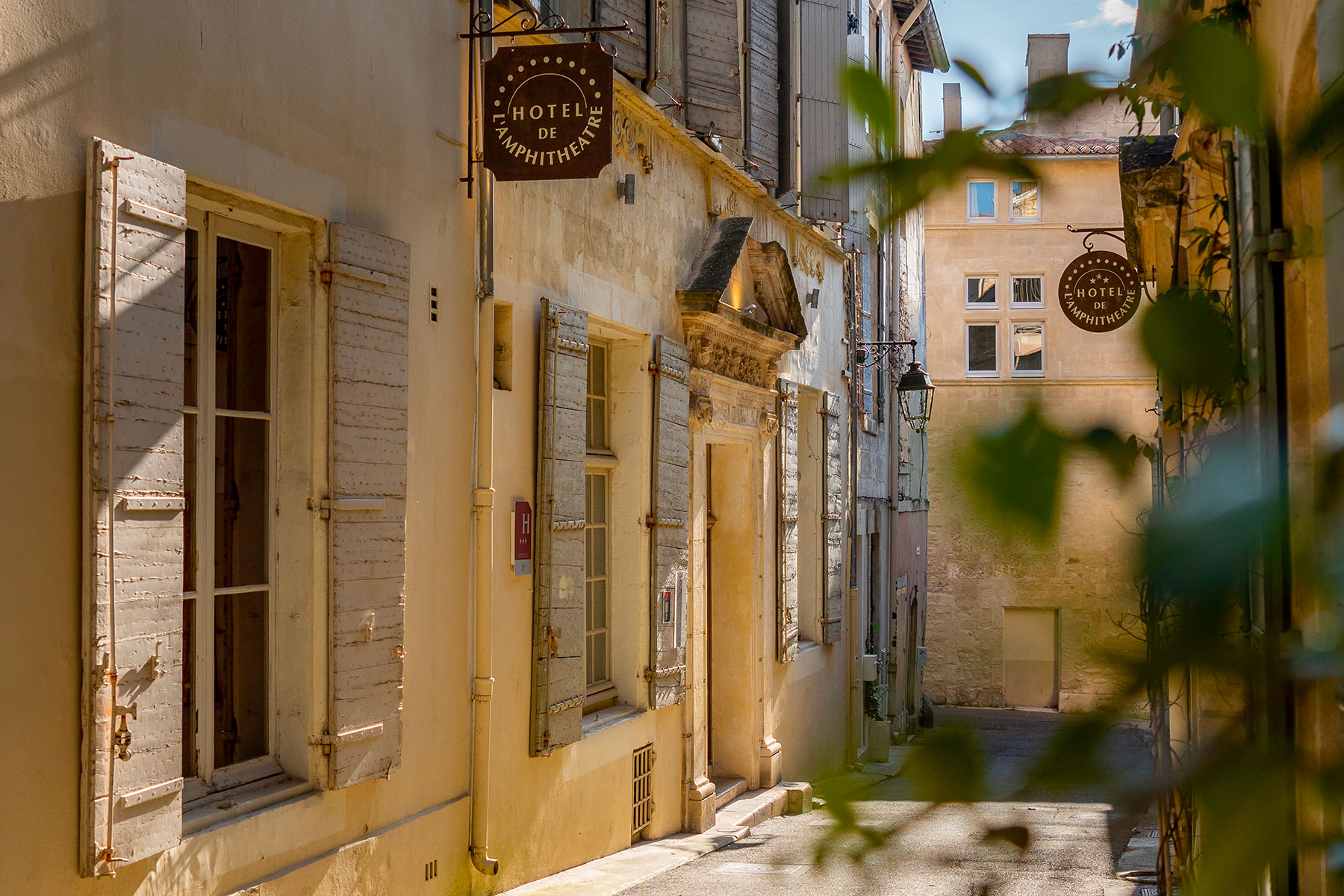
Behind its emblematic façade, familiar to both locals and visitors, Hôtel Amphithéâtre has long been part of the city’s history. Ideally located in the heart of the old town, just a few steps from the Roman Arena, it forms an integral part of Arles’ architectural heritage.

Its stone walls and lines tell the story of time gone by, while the establishment has evolved gracefully over the centuries, preserving its identity and soul. Staying here means experiencing Arles from within, in an authentic setting where the legacy of the past blends harmoniously with the art of hospitality.

hotel-charme-centre-historique-arles-10

History

The earliest historical records linked to the property date back to the 15th century. In 1460, Guillaume de Damiani, of Piedmontese origin and ennobled by Duke Charles of Orléans—also Count of Asti—settled in Châteaurenard. By the late 17th century, the Damiani family, several of whom were Knights of Malta, owned a heritage residence in the La Roquette district. Among them was Jean Damian de Vinsargues, who served as First Consul of Arles in 1708.

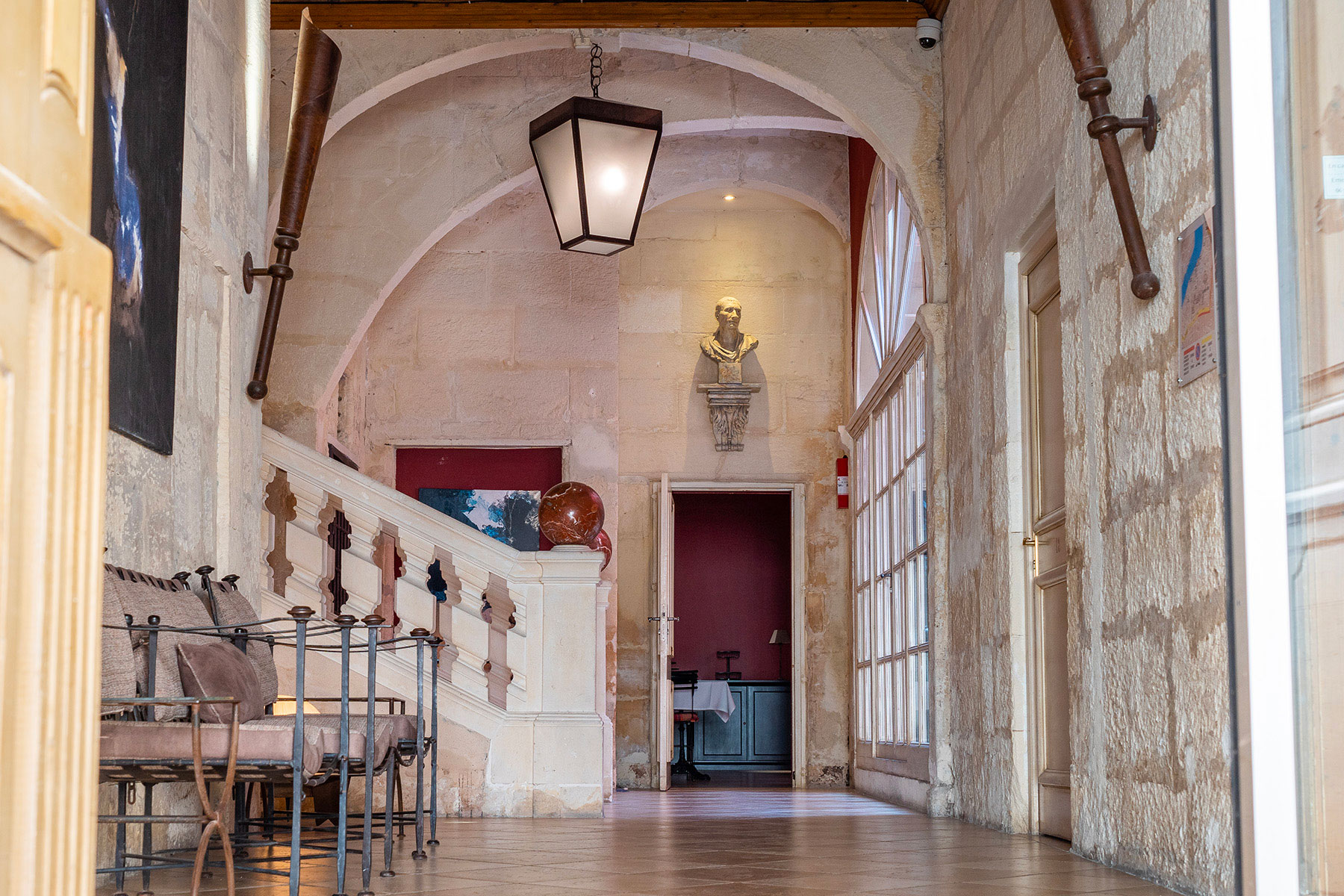
The building as it stands today was constructed in its entirety during the second half of the 17th century. Built on a rectangular plot, it is organized around an inner courtyard and features a spacious entrance hall with a straight-flight staircase and square balusters, typical of civil architecture of the period.

facade-hotel-centre-historique-arles-provence

Architecture

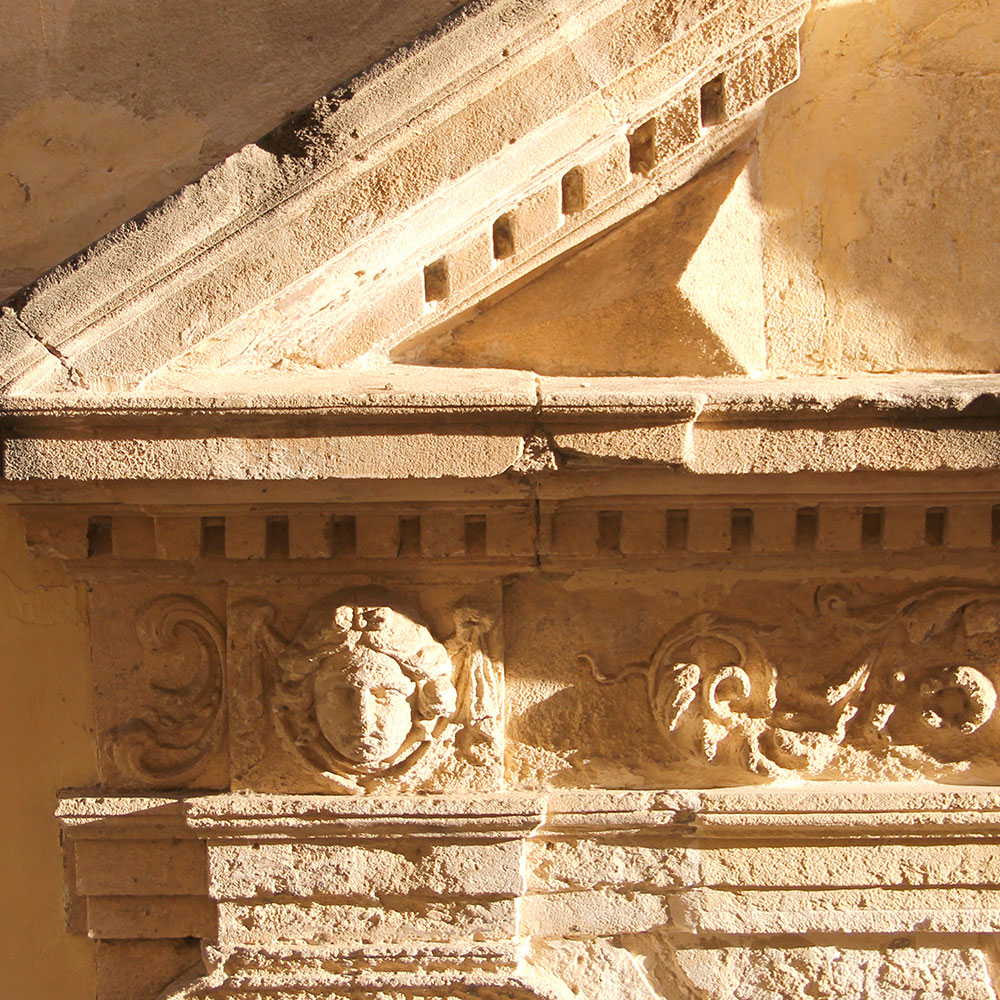
The monumental porch is one of the most striking elements of the façade. It is crowned by a broken pediment, a hallmark of classical architecture, lending the building a sense of nobility and greatness. This pediment rests on a complete entablature, whose sculpted frieze is adorned with scrollwork—intertwined vegetal motifs symbolizing prosperity, continuity, and harmony. The ensemble is supported by two pilasters with Ionic capitals, recognizable by their elegant volutes, evoking balance and proportion inherited from Antiquity.

These decorative elements are far more than ornamental: they assert the social standing of the building’s former occupants and reflect a deliberate intention to anchor the structure within a prestigious architectural tradition, in constant dialogue with the ancient history of Arles.